Project at a Glance
📅 Implementation: Mar 2025 – July 2026 (16 months)
💶 Total Budget: €191,148 | ERDF Contribution: €152,919
🤝 Partners: 2 police institutions
🎯 Type: People-to-People Project
Summary
The UNITE project brings together law enforcement institutions from Satu Mare and Szabolcs-Szatmár-Bereg to take action against domestic violence. The project builds a united front through training, awareness campaigns, and community outreach.
It reaches both professionals and the general public, with workshops for police and social workers, campaigns in schools, and mobile information units at public events. A common methodology help authorities better prevent and respond to domestic violence cases across the border region.
This project clearly shows how Cohesion Policy supports safer communities by helping institutions work together, share solutions and build trust where it’s most needed.
Project Aim
To strengthen cross-border cooperation and raise awareness on domestic violence to reduce its impact in the Satu Mare – Szabolcs-Szatmár-Bereg region.
Objectives
✅ Train police officers and professionals in handling domestic violence
✅ Raise awareness in schools and local communities
✅ Promote early reporting and prevention
✅ Develop a shared response model across borders
Key Activities & Results
🔹 2 workshops for police officers and other professionals with 100 participants
🔹 School campaign reaching at least 300 students in both countries
🔹 6 community events using 2 mobile information units
🔹 Media campaign with podcasts, promotion panels, and a dedicated Facebook page
🔹 Development of a joint action plan and methodology for victim support
🔹 Increased awareness and cooperation among institutions and the public
For more details, consult the project fact sheets [EN / RO] and check out the project's Facebook page.
Partnership
Lead Partner: Satu Mare County Police Inspectorate (RO)
Project Partner: Szabolcs-Szatmár-Bereg County Police Inspectorate (HU)
VIDEO SERIES ON FORMS OF DOMESTIC VIOLENCE | It is an uncomfortable but necessary mirror.
“How does violence feel?” - Abuse has many faces.
It doesn’t always start with a bang, it doesn’t always strike in plain sight, and most of the time, it doesn’t even seem like abuse at first.
It grows slowly, almost imperceptibly: from “jokes” that humiliate, from words that cut deeper than any blow, from rules imposed in one direction only, from control masked as “care.”
It’s not love.
It’s not protection.
It’s violence.
2. “It’s none of our business”—until it becomes our business. Often, violence doesn’t need words to be heard. Sometimes, it echoes through the walls. Other times, through the silence of those who choose not to see.
Domestic violence doesn’t stop on its own. It ends when someone has the courage to intervene, to ask, to report, to help. Because safety is the responsibility of each and every one of us.
3. “Come home… I won’t hurt you… it’s your fault anyway… if you don’t come now, I’ll kill myself!”
They’re just words, but sometimes words can be weapons. This is often how manipulation begins—with promises, guilt, and fear. This is how the cycle of violence is rebuilt, step by step.
4. “I know what’s best for you” is not care.
Because violence sometimes means the gradual erosion of the other person’s freedom and the transformation of an adult into a shadow of their former self.
It is control.
It is the beginning of a relationship that constricts, limits, and suffocates.
It’s time to see.
To acknowledge.
To call things by their name.
To stop tolerating what hurts in silence.
Because a partner is an equal, not a guardian.
And silence protects no one.
5. “When freedom begins to disappear, abuse begins to take shape.”
Relationships don’t become toxic overnight. They change slowly, quietly, when one partner’s freedom begins to be increasingly restricted.
Domestic violence doesn’t start with a blow.
It starts with an “innocent” reproach, with a “justified” restriction, with a question meant to sow doubt.
Step by step, freedom becomes a privilege.
And life—a controlled space.
This type of subtle control can take many forms:
🔹 imposed decisions,
🔹 limiting social contacts,
🔹 emotional pressure,
🔹 manipulation, fear, guilt.
That is why recognizing the signs early on, having accurate information, and accessing specialized support are essential for people to regain their voice, courage, and dignity.
Video spot #5 from the UNITE campaign addresses precisely these invisible beginnings—the most dangerous ones.
Because abuse isn’t always visible. But it’s felt. And it leaves deep scars.
6. When “it’s just a photo” becomes the start of invisible abuse.
Sometimes, it all starts with something seemingly trivial: a photo sent in good faith, a moment shared only “among friends.”
But abuse doesn’t always make a loud noise. Sometimes it comes through a message, through pressure, through induced shame.
By violating your digital and emotional boundaries.
📸 In the video spot, an ordinary situation turns into a wake-up call -> trust can be used against you, and unwanted exposure can become a tool of control.
When her friends started sending her messages, she realized the painful truth: someone had crossed her boundaries.
Someone had violated her privacy. Someone was trying to control her.
But just as quickly, the right decision came:
❗ to stop the situation,
❗ not to give in to the pressure,
❗ to ask for help.
Because every person has the right to boundaries, and violating them—online or offline—is a clear sign of abuse.
Because a healthy relationship doesn’t use your photo as a weapon.
It doesn’t blackmail you.
It doesn’t expose you.
It doesn’t make you afraid.
If something makes you feel uncomfortable, it’s not “being too sensitive.”
It’s a warning sign. Take it seriously.
Acknowledge it. Set boundaries. Ask for help. Help others!
You have the right to be safe—both online and offline.
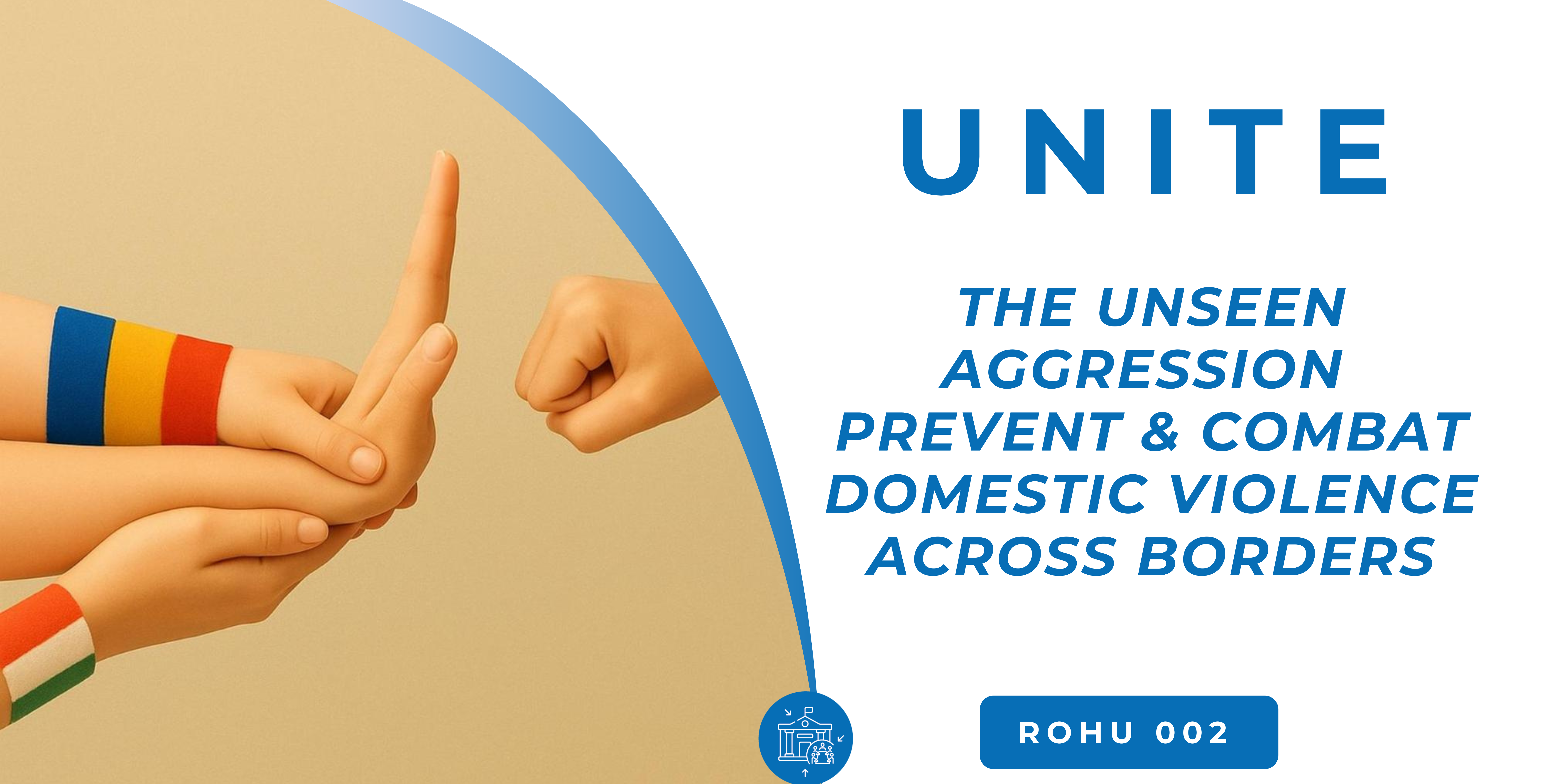
Disclaimer: The banner image is AI-generated and for illustration only.