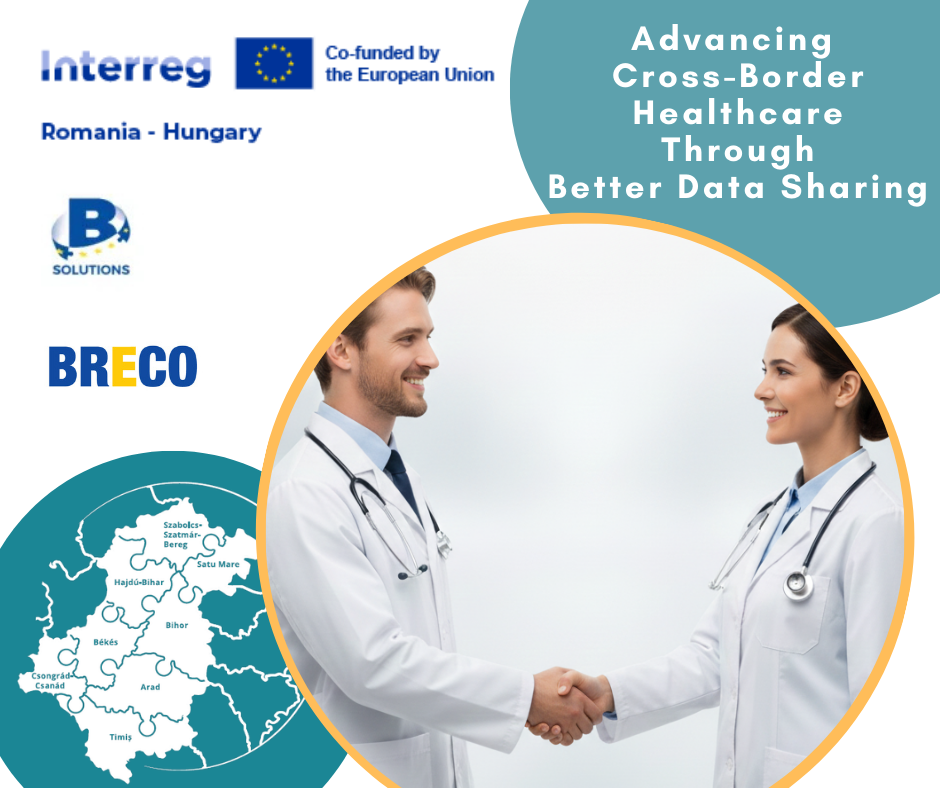
In the Romanian–Hungarian border region, many people regularly cross the border to receive the medical care they need. But when hospitals cannot easily share patient information, treatment is delayed, and coordination becomes difficult. Improving data exchange is essential to ensure timely and safe care for patients on both sides of the border. To address this, BRECO - Oradea Regional Office for Cross Border Cooperation, the body hosting the Joint Secretariat and the Romanian National Control Body for the Interreg ROHU Programme, is working with Health Connect Partners (EU) through the b-solutions 3.0 initiative.
Healthcare is a key funding priority in the Interreg VI-A Romania–Hungary Programme, and several strategic projects are already committed to improving digital cooperation and smoother data transfer between healthcare providers.
An online meeting held on 11 December 2025 brought together b-solutions experts, Interreg ROHU Programme bodies and partners from the strategic health projects (OSIs) DENIM (ROHU 621), ISU-EMERG (ROHU 626) and Resilience4Health (ROHU 627). The discussion focused on how the European Health Data Space Regulation (EHDS) will shape the future of cross-border healthcare.
During the meeting, experts outlined key aspects of the EHDS, including better access to digital health information for patients and clinicians, stronger interoperability between Member States, and clear rules for using data in both clinical care and research. They also highlighted that patient summaries and e-prescriptions are expected to be among the first categories exchanged across the EU by 2029.
Building on the experts’ presentation, project partners shared insights from emergency care, chronic disease monitoring and rehabilitation activities. Their experiences illustrated the need for more coordinated procedures and stronger digital tools. Current challenges discussed included continued reliance on paper summaries, limited access to electronic records from neighbouring countries, differences in national regulations, and the difficulty of developing shared protocols for frequent cross-border care.
These contributions will help guide national preparations for implementing the EHDS and future interoperability standards.
The meeting reinforced a shared commitment to building a more connected digital health system, ensuring that patients in border regions benefit from faster, safer and more coordinated healthcare.