On 1 September 2026, representatives of Romania and Hungary gathered in Oradea for the first meeting of the Programming Committee (PC), marking the formal start of the preparation of the Interreg Chapter for the 2028-2034 programming period.
The Programming Committee brings together representatives of national, regional and local authorities, institutions and other relevant organisations from both sides of the border. Its role is to guide the preparation of the future Programme and contribute to defining the priorities that will shape the cooperation between Romania and Hungary after 2027.
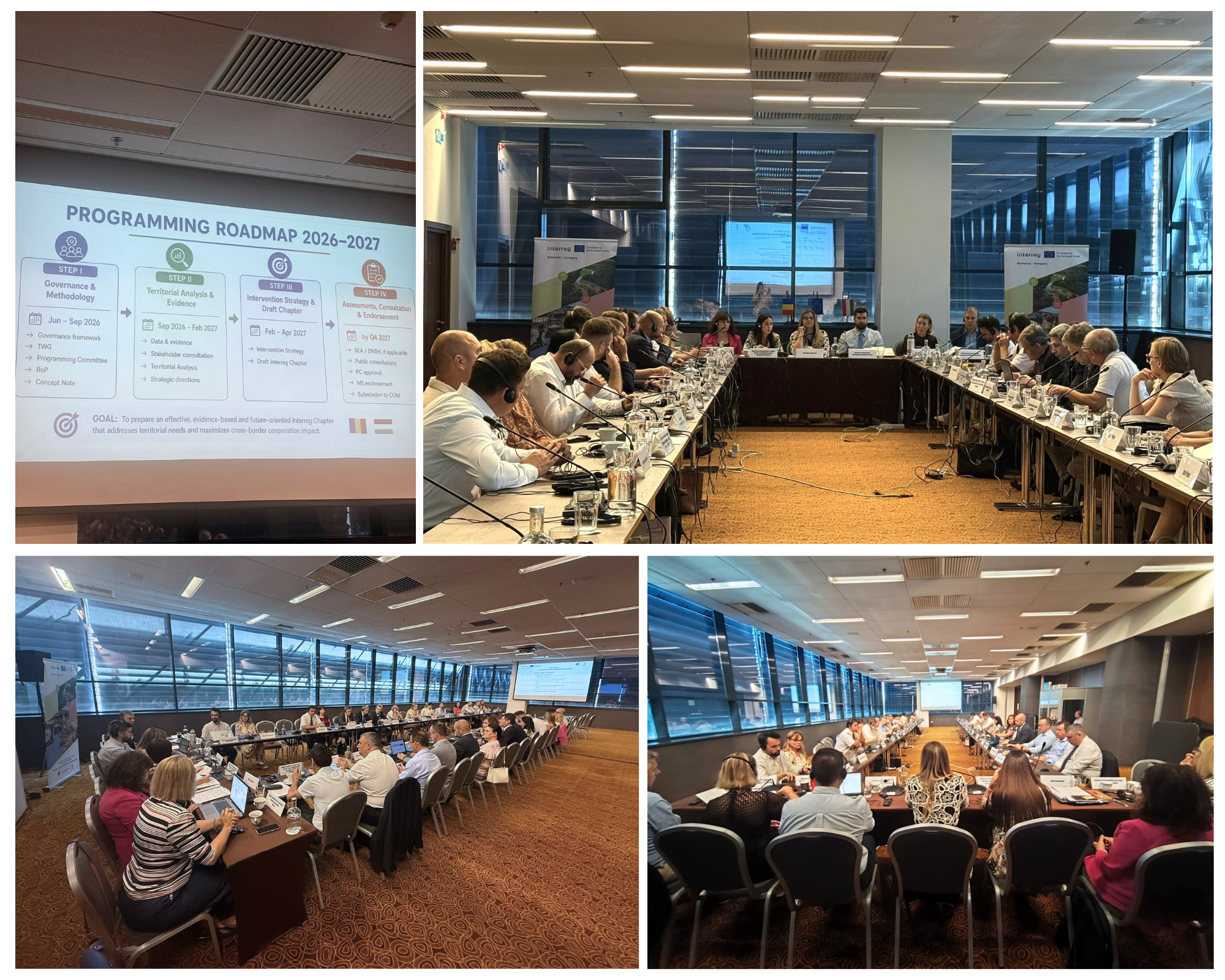
The first meeting established the framework for the work ahead. Committee members approved the Rules of Procedure of the Programming Committee, as well as the Concept Note and Methodological Framework for the preparation of the Interreg Chapter 2028-2034 (including the annexes).
Representing the European Commission, Mr Csaba Hende, DG Regional and Urban Policy (DG REGIO), welcomed the launch of discussions on the future Programme.
"It will be important to closely follow legislative developments while building on the strong cooperation and achievements of recent years," Mr Hende concluded.
As Chairperson of the Programming Committee, Ms Camelia Coporan, Head of the Managing Authority for the Interreg VI-A Romania-Hungary Programme, highlighted the value of bringing together the knowledge and experience of the institutions represented in the Committee.
"The knowledge and experience brought together within the Committee provide a strong foundation for a rigorous programming process and the development of a coherent and high-quality Interreg Chapter," Ms Coporan said.
The Committee will discuss and, where appropriate, endorse the main outputs of the programming process as the preparation of the Interreg Chapter progresses.
Speaking on behalf of the Hungarian National Authority of the Interreg VI-A Romania-Hungary Programme, Ms Nikoletta Horváth, highlighted the importance of stakeholder involvement throughout the programming process and the value of combining local knowledge with strategic planning.
"Regional stakeholders have a key role to play in shaping the future Programme. Their knowledge and active participation in the consultation process will help ensure that future priorities are firmly rooted in the realities of the border region."
This stakeholder perspective will be an important part of the work ahead. In the coming period, analyses, consultations and dialogue with stakeholders across the Programme area will help identify the priorities, challenges and opportunities that can best be addressed through cross-border cooperation in the 2028-2034 period.
The first meeting has therefore marked the beginning of the preparation of the post-2027 Interreg Programme, a process that builds on the cooperation and achievements of recent years while looking ahead to the changing needs and opportunities of the border region.