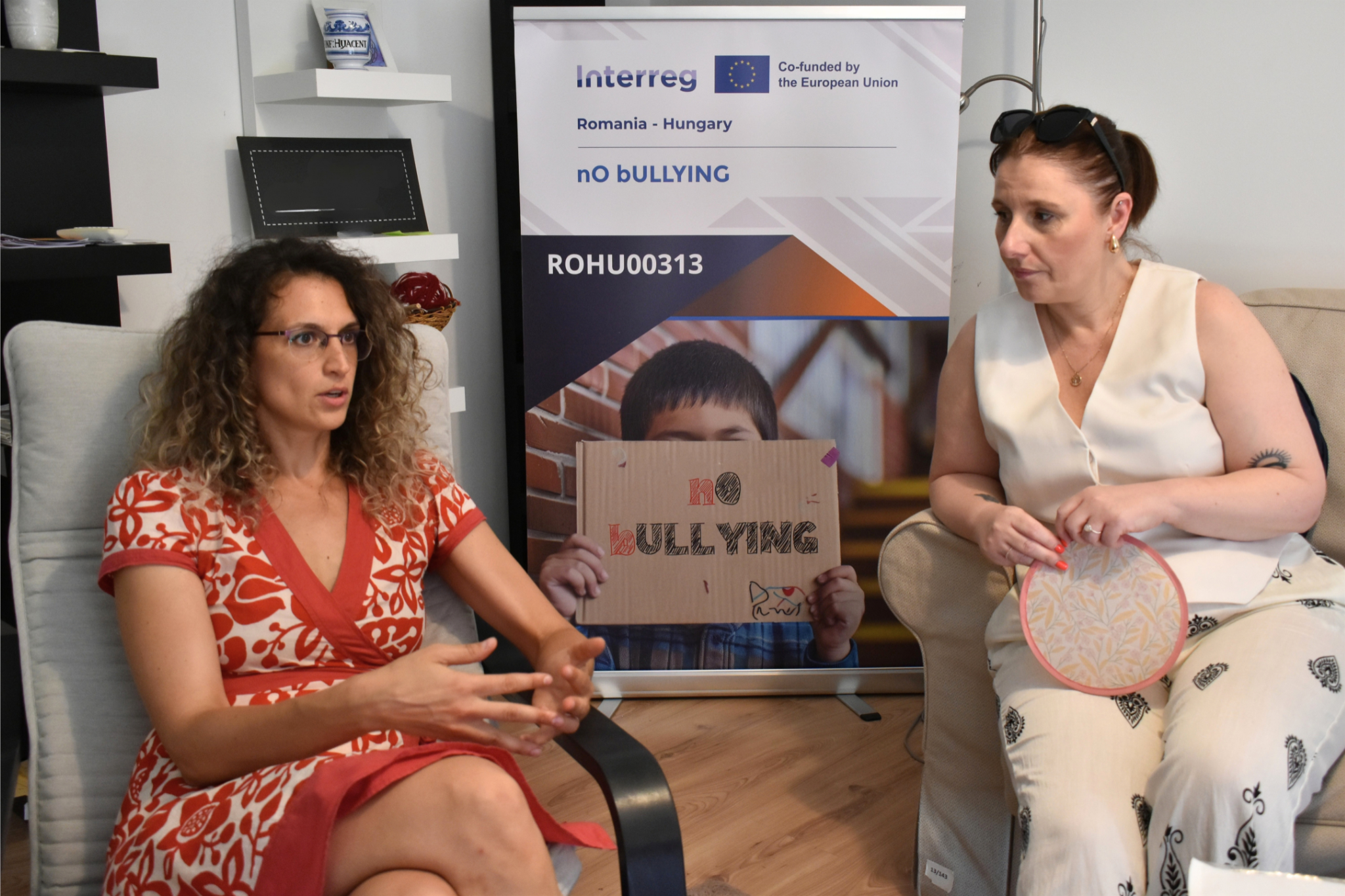
The story of two women who turned the fight against bullying into a promise: no child faces it alone
It doesn't always start with a fight in the schoolyard.
It starts quieter than that. A girl who stops raising her hand in class. A boy who eats lunch alone, again, and says he's "not hungry." A group chat a child was never added to. Since the pandemic, the reality behind these small silences has become harder to ignore. The World Health Organization recorded a 25% global rise in anxiety and depression during the pandemic's first year alone, with young people among those hit hardest - more loneliness, more kids who no longer feel safe simply being themselves in a room full of their peers.
Bullying, in 2026, rarely looks like the movie version. It's exclusion. Rumours. A joke that isn't funny to the one it's aimed at. And too often, the adults around a child - teachers, parents, even professionals - don't catch it until the damage is already shaping who that child is becoming.
And it's the same story whether the classroom is in Romania or Hungary. That shared reality is what three organisations, on two sides of a border, decided to take on together, not with the illusion that one project could erase it, but with the conviction that every child reached, every adult prepared, every door opened was worth building.
A believer in "Aha" moments
Bea Sárcsevity Hajdú is a mother of three, a social worker and social policy expert, and the project manager behind nO bULLYING | ROHU00313, on behalf of the Szent Gellért Association in Szeged. Long before any of those titles, she thought she'd become a nurse, until she saw how much patients were suffering in a hospital, and realised the kind of help she wanted to give was different. So, she found another way.
Ask her what drives her work today, and she doesn't talk about funding lines or deliverables. She talks about research, and about people.
"Research carried out after the COVID-19 pandemic clearly shows that the mental wellbeing of children and young people has declined significantly," she says. "As professionals, our responsibility is greater than ever."
But statistics aren't what keep her going. Moments are. She calls them "aha moments": the instant a teacher or a young person suddenly recognises something in their own behaviour and starts, almost involuntarily, to question it. It might be the realisation that bullying isn't only physical, that exclusion, rumours and mockery can be just as damaging. Or a long-held prejudice, quietly cracking open.
"These are the moments when real change begins," she says. "Not because someone is told what to think, but because they begin to see themselves and the world differently."
For Bea, safety was never just the absence of violence. It's something closer to belonging, and it's a right, not a privilege.
"A safe school is not just a place without conflict," she says. "It is a community where every child feels: I matter, I am accepted, and I belong." She's just as firm on who gets access to that feeling. "Mental health support should never be a privilege. In a fair society, access to support should not depend on a family's financial situation."
Being truly seen
By Bea's side is Ágnes Szabó – Ági, to everyone who knows her - a mental health counsellor with 24 years of experience guiding teenagers through the years when they're deciding who they'll become.
What pulled her into this work wasn't a single event. It was the age group itself. "What inspires me most is the energy, creativity and diversity that come with working with adolescents," she says. She doesn't idealise them - "I know that working with teenagers is not always easy" - but she's convinced of their potential and says they're the group that makes her feel most strongly that her work carries real, lasting impact.
If Bea defines safety as belonging, Ági defines it as being truly seen. "Feeling safe at school means being truly heard and genuinely seen," she says. "Knowing there is a trusted adult who listens, pays attention, and responds with consistency and care whenever support is needed."
For Bea and Ági, a child’s mental wellbeing is not something to deal with later. It needs attention from the very beginning.
What the partnership actually built
nO bULLYING | ROHU 00313 brought together three organisations that built a solid partnership across the border, step by step. Through the project, they established counselling centres in both Szeged and Timișoara, trained mentors, and brought a hundred young people together for cross-border camps. They also built a methodological handbook, based not just on theory alone, but on field-tested workshops covering empathy, conflict resolution, and subjects schools rarely address, such as addiction and risk behaviour. One workshop with teenagers, for example, focused on exploring school bullying through creative activities, encouraging participants to express their feelings and experiences through art - a chance to reflect on bullying and its emotional impact in a different way.
Bea calls the partnership itself one of the project's real lessons: "Real and lasting change is only possible when professionals, institutions and communities work together as equal partners." Ági agrees - "From our Romanian partners, I learned the true value of cooperation, the strength of community and the importance of flexibility”. In their own words, both describe the same way of working: staying open when something unexpected came up, and trusting each other to find a solution together.
Asked what she'd want every school to take from this project, Bea points straight to that handbook, not as a document, but as a mindset. "Prevention is not a single lecture or campaign," she says. "It is an ongoing process of developing young people's personal and social competencies." Ági takes the same question further. She would like to see volunteer youth workers become a permanent presence in schools, and bullying prevention taught to the next generation of teachers before they ever set foot in a classroom.
The people nobody expected
The project was not designed for parents. But somewhere in the first months of workshops and open office hours, mothers started showing up too. They had heard that this was a place where they could talk openly, without being judged.
“What surprised me most,” Ági says, “was the emergence of a new target group - mothers - and the growing demand for free individual counselling among young adults.”
They came with family conflicts, parenting worries and mental health struggles that had little to do with school, and yet were closely connected to what young people were experiencing at home and in their everyday lives.
What started as an opportunity for support gradually became something neither organisation had planned for: a group of mothers who began meeting, sharing their experiences and supporting one another. The group still meets today. Their conversations have ranged across motherhood and women's personal experiences more broadly, from becoming a mother and the dilemmas that come with it, to femininity, the idea of being a "good enough mother," and the importance of making time for themselves. More recently, the group has turned to relationships and intimacy.
“The project did not end when the funding ended,” Bea says. “It created something much more lasting, a community built on trust, connection and mutual support.”
A door, not a miracle
Perhaps that was the project's clearest lesson: prevention does not stop at the classroom door. A child carries school home, just as family life follows a child into school. Supporting one often means making room for the other.
That girl who stopped raising her hand. That boy who says he’s “not hungry.” The group chat someone was never added to. None of that disappears simply because a project exists. What changes is something concrete and lasting: there is now a door those children and their parents can walk through, in Szeged (Support Centre Léleklenyomat, Gém utca 16/B, 3rd floor, apt. 7) and Timișoara (Bd. Revoluției din 1989, Nr. 8) alike. And someone on the other side who is there to listen, to help, and to remind them that they matter.
Project at a glance
Implementation: December 2024 – December 2025
Total budget: €232,690 | ERDF contribution: €186,152
Project partners: Szent Gellért Association (HU, Lead Partner), Bastion-Vár Bástya Association (RO), Society for Children and Parents (RO)
What did the project do?
The project established and equipped counselling centres in Szeged and Timișoara, trained youth mentors and volunteers, and developed a field-tested methodological handbook and training curriculum for professionals working to prevent violence and abuse against children. Young people took part in thematic camps, counselling, workshops on children's rights, and weekly peer support groups, while awareness campaigns, including school sessions, information leaflets, and ongoing social media and blog content, reached hundreds of young people across both countries. The project also launched SAFE, a free anti-bullying app available on Google Play and the App Store, giving young people 24/7 access to support and guidance in situations of risk.